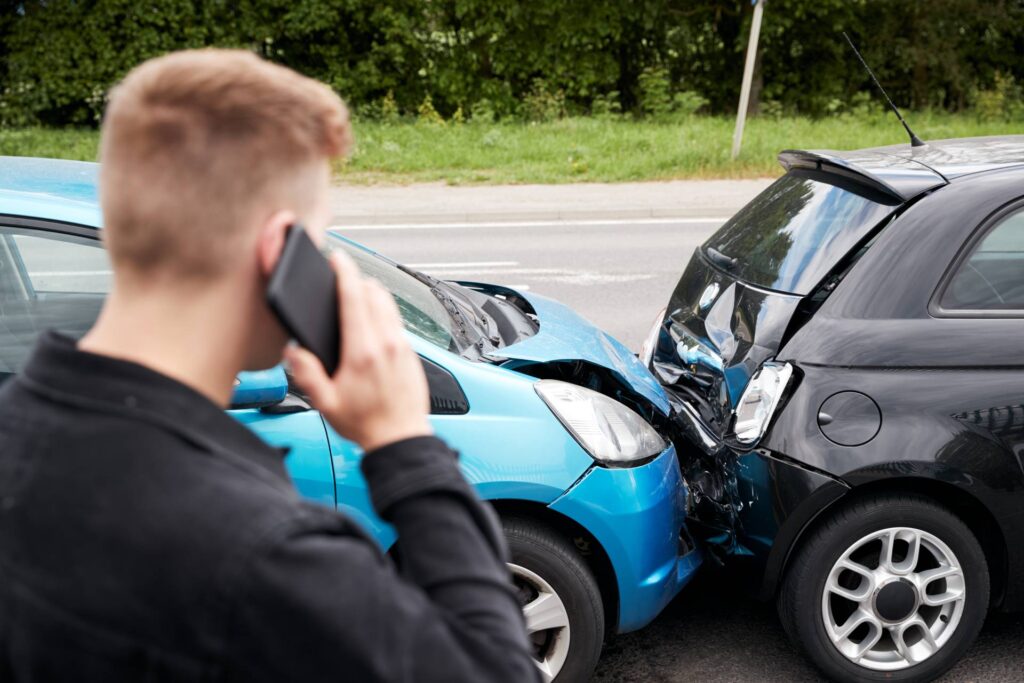
Rear-end collisions are often treated as the simplest car accident cases. One vehicle strikes another from behind, so it seems obvious that the rear driver must be responsible. Often the evidence supports that conclusion, but California law does not make fault automatic simply because one vehicle hit the back of another.
The circumstances leading up to the impact still matter. A sudden lane change, malfunctioning brake lights, an unexpected stop, or multiple vehicles colliding in sequence can complicate a seemingly straightforward accident, and insurers may dispute how the crash happened, how much each driver contributed, or whether it caused the injuries claimed. For someone injured in a rear-end collision in Beverly Hills, understanding how liability is actually determined helps prevent assumptions from replacing evidence.
California Drivers Must Maintain a Reasonable Following Distance
California law requires drivers to avoid following another vehicle more closely than is reasonable and prudent under the circumstances. Safe following distance depends on speed, road conditions, congestion, weather, and how much time a driver needs to react if the vehicle ahead slows or stops.
This is the main reason the rear driver is frequently found responsible. Drivers are expected to leave enough space to respond to predictable changes in traffic, so if a vehicle stops for a red light or brakes for a pedestrian, the driver behind should be able to react without a collision. Following distance matters even more in busy parts of Beverly Hills, where drivers encounter frequent intersections, valet operations, rideshare pickups, and sudden changes in traffic flow. Still, the duty to maintain distance does not mean every rear-end collision has the same explanation; liability depends on what occurred before impact.
Sudden Stops and Defective Brake Lights Do Not Settle Fault on Their Own
The most common defense after a rear-end accident is that the vehicle ahead stopped suddenly. Traffic often requires drivers to stop quickly; a pedestrian enters a crosswalk, a signal changes, or congestion develops ahead, and a reasonable following distance exists to give drivers time to respond to exactly these situations. The reason for the stop is what matters. If the front driver braked for traffic or a roadway hazard, the stop was likely reasonable; if the evidence suggests the driver slammed on the brakes without justification, liability becomes more complicated. Insurers lean on the phrase sudden stop because it sounds persuasive, but the better question is why the vehicle stopped and whether a reasonably careful following driver should have been able to react.
Defective brake lights create another disputed situation. Functioning brake lights are required equipment and provide the warning that the vehicle ahead is slowing, so evidence that they were not working may become relevant when determining whether both drivers contributed to the crash.
Unsafe Lane Changes and Chain Reactions Complicate Rear-End Liability
Not every rear-end accident begins with two cars in the same lane. Some occur immediately after one driver merges or changes lanes. Imagine a vehicle moving into another driver’s lane with only a small gap, then slowing or stopping. The driver behind may have had no opportunity to create a safe distance, and although the front vehicle was technically struck from behind, the unsafe lane change may have contributed significantly to the crash. Without objective evidence of whether a lane change occurred and how much time the following driver had, these accidents become competing versions of the same event.
Rear-end collisions become more complicated when three or more vehicles are involved. One driver may push a vehicle forward into the car ahead, or several drivers may collide independently within seconds. Striking the car in front does not mean that driver caused the entire chain reaction; investigators must determine the order of impacts and whether one collision set everything else in motion.
Drivers and passengers often remember multiple impacts differently after a stressful crash, so damage patterns, witness statements, electronic vehicle data, and accident reconstruction may be needed to establish the sequence. These distinctions affect which insurance policies are responsible for particular injuries and how fault is divided.
California Comparative Fault Can Divide Responsibility Between Drivers
California follows a comparative fault system, meaning more than one person can share responsibility for an accident. If an injured person contributed to the collision, compensation may still be available, but it is reduced according to that person’s percentage of responsibility.
This is especially important in disputed rear-end cases, where a following driver may have been too close while the driver ahead made an unsafe lane change, or one driver was distracted while the other had defective brake lights. Insurance companies understand this well; even when their insured driver appears primarily responsible, an insurer may look for evidence to assign some percentage of fault to the injured person, which is why comparative fault arguments should be evaluated against the facts rather than accepted as correct.
Evidence Resolves Disputes, and Much of It Disappears Quickly
When fault is contested, objective evidence becomes more valuable than assumptions about rear-end accidents. Photographs taken immediately after the crash can document vehicle positions, damage, skid marks, and traffic signals. Surveillance footage from businesses, hotels, and parking facilities is particularly useful in Beverly Hills, where crashes often occur along commercial corridors, and dashcam footage or electronic vehicle data may show whether a lane change occurred or whether braking happened before impact. Witnesses fill in what physical evidence cannot; someone who saw a driver cut into a lane or follow unusually closely may provide important independent information.
Much of this evidence is time sensitive; footage is overwritten, vehicles are repaired, and witnesses become harder to locate. Many rear-end collisions initially appear straightforward, so injured people may not realize liability is contested until the other driver gives a different account or an insurer assigns partial responsibility. By then, the evidence that would have resolved the dispute may be gone.
Injury Disputes Can Continue Even When Liability Seems Clear
Establishing who caused the collision is only part of a personal injury claim. Insurers may accept that their driver caused a rear-end crash while disputing whether it caused the injuries being claimed. This is common with injuries that are not immediately visible. Neck and back injuries, concussions, and soft tissue injuries may become noticeable only after the initial shock subsides, and delays in treatment can create disputes because an insurer may argue that another event caused the symptoms or that the injuries were less serious than claimed.
Severe rear-end collisions can result in fractures, traumatic brain injuries, spinal injuries, or other conditions requiring long term care. In those cases, evaluating damages involves future treatment, lost earning capacity, and the broader effect the injury has on the person’s life. A Beverly Hills car accident attorney can review the circumstances, preserve evidence, communicate with insurers, and evaluate whether comparative fault allegations are supported by the facts, which is especially useful when injuries are serious, several vehicles are involved, or fault is disputed.
Frequently Asked Questions About Rear-End Collisions in Beverly Hills
Is the rear driver always at fault in a California rear-end accident?
No. The rear driver is frequently responsible because California requires motorists to maintain a reasonable following distance, but liability depends on the circumstances. Unsafe lane changes, defective vehicle equipment, or other factors can affect how fault is divided.
Can the front driver be partially responsible for a rear-end collision?
Yes. The front driver may share responsibility if their own negligence contributed to the crash, since California’s comparative fault rules allow responsibility to be divided between multiple parties.
Is a rear-end claim worth pursuing if the damage to my car looks minor?
Potentially. Low speed collisions can still cause neck, back, and soft tissue injuries that are not obvious at the scene, and vehicle damage does not determine the extent of injury. Whether a claim is worth pursuing depends on the injuries and their effect on your life, not the size of the dent.
What happens if I was pushed into another car after being hit from behind?
Liability depends on the sequence of impacts. If another vehicle struck yours and pushed you into the vehicle ahead, evidence may show the initial driver caused the chain reaction rather than you causing the second collision.
What should I do if the insurance company says I caused part of the accident?
Do not assume the insurer’s determination is final. Comparative fault should be supported by evidence, and reviewing photographs, video, witness statements, and vehicle damage can show whether the insurer’s position reflects what happened.
Getting Clear Answers After a Disputed Rear-End Collision
Rear-end collisions may look simple from the outside, but liability becomes complicated when drivers disagree about lane changes, sudden braking, following distance, or the sequence of multiple impacts. California law requires reasonable following distance, while comparative fault divides responsibility when more than one person’s actions contributed.
At Titan Law Firm, our Beverly Hills personal injury team looks beyond assumptions and examines the evidence surrounding each collision. Led by Justin Bina, the firm helps injured clients understand liability, comparative fault, and the damages that may be available under California law.
If you were injured in a rear-end collision in Beverly Hills or the surrounding Los Angeles area and the insurer is disputing responsibility, experienced legal guidance can help you understand where your claim stands. Contact Titan Law Firm to schedule a free consultation and discuss the circumstances of your accident.
Call us at (888) 848-2656 or visit www.TitanLawFirm.com to learn more.