
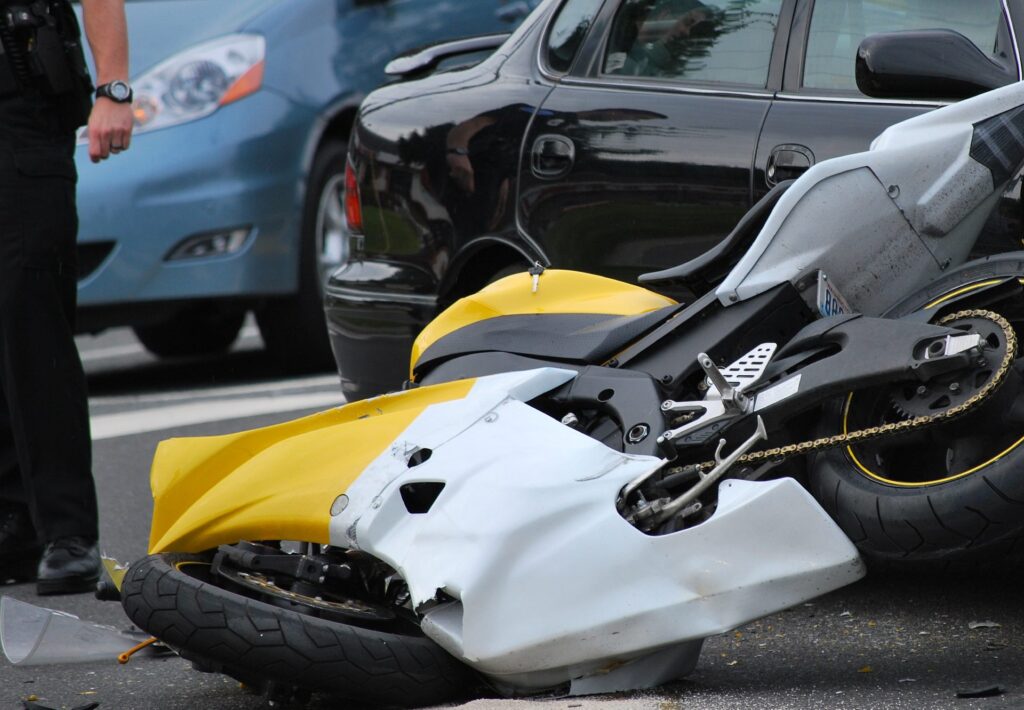
Motorcyclists often face a challenge that people injured in passenger vehicles rarely encounter: the assumption that the rider must have done something wrong. A driver, witness, or insurance adjuster may focus on speed or lane positioning before the evidence has even been reviewed. Those assumptions can shape how a claim unfolds, but they do not determine legal responsibility.
Under California law, fault is based on conduct and evidence, not stereotypes about riders. Drivers still owe motorcyclists a duty of reasonable care, including watching for them, checking blind spots, yielding when required, and avoiding unsafe maneuvers. For someone seriously injured in a Beverly Hills motorcycle accident, separating perception from evidence is often the most important part of the claim.
Why Motorcyclists Face Unfair Assumptions After a Crash
Motorcycles are often associated with speed and risk, even though that has little to do with fault in a specific collision. An adjuster may question whether a rider was speeding or weaving through traffic, particularly when no independent witnesses are available to contradict that account.
These assumptions matter because liability is one of the foundations of an injury claim. If an insurer can argue that the motorcyclist caused or contributed to the accident, the amount it ultimately has to pay can be reduced, giving insurers a financial incentive to scrutinize a rider’s conduct closely. That scrutiny does not mean an insurer can simply deny a valid claim; liability should be supported by evidence, not assumptions.
How California Law Determines Fault in a Motorcycle Accident
California motorcycle accident liability generally comes down to negligence: whether someone failed to exercise reasonable care and whether that failure caused the collision and resulting injuries.
Consider a driver who changes lanes without adequately checking for a motorcycle traveling beside the vehicle. If the driver enters the rider’s lane and causes a collision, evidence of the unsafe lane change may support a finding of negligence, regardless of the fact that the injured person happened to be riding a motorcycle. Other common scenarios involve left turns across a rider’s path, following too closely, an opened car door, or a failure to yield. Distracted driving is particularly dangerous for motorcyclists because their smaller profile can already make them harder for inattentive drivers to notice.
The circumstances become more complicated when both parties may have made mistakes, which is where California’s comparative negligence rules become important.
California’s Pure Comparative Negligence Rule
California follows a pure comparative negligence system. This means an injured person may generally recover damages even when they bear some responsibility for the accident, although the recovery is reduced according to their percentage of fault.
For example, evidence might show that a driver made an unsafe turn while also showing that the motorcyclist was traveling above the speed limit. Determining how much each action contributed to the collision can become a significant part of the case, but the rider’s potential contribution would not necessarily eliminate the claim; it would affect the amount of compensation available.
This matters directly when overcoming bias in a claim. An insurer may try to transform a relatively minor mistake by the rider into an argument that the motorcyclist was primarily responsible for the entire crash, and a thorough investigation can place each person’s actions in proper context instead of letting assumptions substitute for evidence.
Evidence That Replaces Assumptions With Facts
When liability is disputed, objective evidence becomes especially valuable. Statements made by drivers immediately after a crash provide one perspective, but physical and electronic evidence often provides a clearer picture of what actually happened.
Video can be particularly important in Beverly Hills, where footage may exist from nearby businesses, residential properties, parking facilities, or dash cameras, potentially showing vehicle positions or the sequence of events leading to impact. Independent witnesses can also help; someone who saw a vehicle turn across a rider’s path or a driver looking at a phone before impact may substantially change the liability analysis.
Vehicle damage, roadway photographs, skid marks, police reports, and electronic data can provide additional evidence, and in more serious cases, accident reconstruction specialists may analyze it to evaluate speeds and impact points. The goal is not a larger case file, but an accurate account of the crash before assumptions take hold.
Why Motorcycle Injuries Are Often More Severe
Motorcyclists have far less physical protection than occupants of passenger vehicles, with no enclosed compartment or seat belt to absorb the force of a collision, so a crash causing moderate damage to a car can leave a rider with devastating injuries, including traumatic brain injuries, spinal cord damage, fractures, severe road rash, and amputations. Some people recover after surgery and rehabilitation, while others experience permanent limitations affecting their ability to work or care for themselves.
Insurance disputes often extend beyond who caused the crash, since an insurer may accept some responsibility while challenging the severity of the rider’s injuries or the cost of future care. This makes medical documentation essential; treatment records help establish not only what injuries occurred, but how they affect a person’s daily life and future care needs.
The Full Value of a Motorcycle Injury Claim
One common mistake after a serious accident is evaluating a claim based only on medical bills that have already arrived, which represent just one part of the financial and personal impact of a serious injury. Depending on the circumstances, damages may involve past and future medical expenses, lost income, diminished earning capacity, and effects on independence and quality of life.
Future damages require particular care. A rider who cannot return to the same occupation or needs ongoing therapy may face costs that continue long after an insurer first proposes a settlement, and resolving a claim too early can be a problem because settlements generally bring a claim to an end. A Beverly Hills motorcycle accident attorney can work with medical professionals and other experts to evaluate these longer-term consequences rather than focusing only on the expenses that are easiest to calculate.
Protecting Your Claim During the Insurance Process
Insurance adjusters investigate accidents as part of evaluating coverage and liability, and riders should remember the insurer is evaluating the claim from its own financial perspective. Statements made shortly after a crash can matter later; a rider who says they are fine before symptoms develop, or guesses about speed, may unintentionally create an issue the insurer later emphasizes. Social media posts can create similar complications when read outside their original context.
Evidence does not necessarily remain available forever. Surveillance systems may overwrite recordings and witnesses become harder to locate as time passes, so early investigation can be valuable when a motorcyclist is being blamed for a collision. California also imposes deadlines on personal injury claims, and a motorcycle accident lawyer can help determine which apply. Seeking legal guidance early does not mean a lawsuit will be filed; it gives an injured rider the chance to preserve evidence and make informed decisions before accepting an insurer’s version of events.
Frequently Asked Questions About Beverly Hills Motorcycle Accidents
Can an insurance company blame me simply because I was riding a motorcycle?
An insurer can investigate a motorcyclist’s conduct, but fault should depend on the evidence, not stereotypes about riders. Traffic violations, witness accounts, video footage, and vehicle damage may all be relevant.
Can I recover compensation if I was partially responsible for the accident?
Potentially, yes. California’s pure comparative negligence system generally allows an injured person to recover damages even when partially responsible, although the recovery may be reduced according to that person’s percentage of fault.
What evidence is most useful when another driver blames the motorcyclist?
The most valuable evidence depends on the accident, but surveillance or dashcam footage, witness statements, photographs, and police reports can all help establish how a collision occurred.
Should I give the other driver’s insurance company a recorded statement?
You should understand the purpose and potential consequences of a recorded statement before providing one, since statements made shortly after an accident can later become part of a liability dispute, particularly if the injured person speculates about facts or minimizes injuries that have not yet been fully diagnosed.
How soon should I contact a motorcycle accident lawyer after a Beverly Hills crash?
Speaking with an attorney early can be useful when injuries are serious or fault is disputed, since important evidence may disappear over time. An attorney can evaluate the circumstances, explain applicable deadlines, and help preserve evidence before making recommendations about how to proceed.
Protecting Your Rights When Perception Does Not Match the Evidence
Motorcyclists should not have to overcome a presumption of guilt simply because they chose to travel on two wheels. California motorcycle accident claims are decided based on negligence, evidence, and the circumstances of the collision, not generalized assumptions about how riders behave. When fault is disputed, preserving objective evidence and understanding comparative negligence can be critical to protecting a legitimate claim.
At Titan Law Firm, our Beverly Hills personal injury team understands that motorcycle accidents can involve both severe injuries and complicated liability disputes. Led by Justin Bina, we investigate serious accidents, deal directly with insurance companies, and help injured riders understand the compensation that may be available under California law.
If you were injured in a motorcycle accident in Beverly Hills or elsewhere in the Los Angeles area and believe you are being unfairly blamed, you do not have to accept the insurance company’s interpretation of what happened. Contact Titan Law Firm for a free consultation to discuss the evidence, understand your legal options, and determine the appropriate next steps for your case.
Call us at (888) 848-2656 or visit www.TitanLawFirm.com to learn more.